There is already a sense of "up the ante" in the rhetoric of State election promises. My current peeve is: any promise on juvenile toughness you can make I can make tougher.
Education Minister, Jane (The Terrifying) Lomax-Smith (see here) announced that a newly elected Labor government would barcode schoolkids so that they could be scanned each day and truancy records automatically generated. Countered by Liberal Vicki (the Equally Terrifying) Chapman with: we will publish the attendance records.....for what good that will do.
Do either of these people have a commitment to doing more than appealing to a certain sector's vocal critique that we are not tough enough on our kids? This sort of bizarre toughness auction does little, in my mind, to actually address issues.
At least part of the question is about the failure of our school system to actually address the issues to do with such things as truancy. We need not so much to ask...how can we keep better track of those who play truant? as why do they play truant?
It is convenient for governments who want to have mass appeal, but who do nto want to spend dollars where they can get away with it, to blame shift.
Ask yourself, why do kids not go to school? On the face of it the root analysis must be that there is something outside school that is more attractive than inside. As long as schools are struggling with inadequate resources, understaffing, a dispirited staff and degenerating facilities...it will always be possible to find better options outside.
If, and I say "if" both parties are genuinely interested in ensuring kids stay at school and not play the truant then the solutions need to be better than the sort of draconian stuff that is being talked about here.
However Fred and Thelma Voter, often vociferous about the young ratbags, are not terribly interested either in challenging our clever pollies to do more than just act tough.
Many years ago, we coined the notion of the "clever country". Certainly SA expresses interest in becoming a technology centre of Australia. For the life of me I cannot understand how we can become a "clever country" without the deepest commitment to education...this means big dollars. But there seems little political will.
Once again, although the auction election is fascinating it exposes that in many ways both sides of Parliament are interested in the short term ("get me elected for another four years") solution. And are quite happy to ignore these fundamental issues.
In a perverse way we should be thankful to the truants, they expose to us a system that is unable to keep the interest of these young people who shoudl be being offered the best of all possible educations, but they are not!
Tuesday, 31 January 2006


Monday, 30 January 2006
Failure, fun and frolic
You will forgive me if at least on a few occasions in the next fortnight or so I reflect on the momentous achievement of having been ordained a priest for 25 years. There are many reflexions I could offer (and will). One thing is certain, things have changed in that time.
Although, I would suggest, there was already a significant lowering of the status of the clergy by the time I was ordained in the early 80s, there is no doubt that clergy no longer enjoy a social status simply by virtue of wearing a collar back to front.
This has both positive and negative connotations. I used to detest riding the bus or train and being collared (forgive the pun) by some maniac who felt they had the right to badger me simply because I was there. Conversely it was curious and at times saddening or annoying to be avoided by others for the same reason.
In the way of perversity there have been times when both of these things have exactly the opposite effect cited above. But in 2005 I seldomly wear a clerical collar and I live in a community where I am known as a priest and I do not particularly have to parade it.
There has been a lot of failure. So many people disappointed in me, often with totally bizarre expectations of what a priest might do towards solving problems they couldn't or wouldn't address for themselves. But often because I have failed, missed opportunities, been unprepared, careless or thoughtless. Mainly, I would suggest, because ever-increasing exhaustion just shrinks the possible. I, like everyone else in work these days, is asked to make more and more bricks with less and less straw.
One of my mentors used to say that priests need to challenge this hurtling business and that we should be brave enough to be seen flying kites with kids. I have tried to do that. I think that's important, but most people don't get it.
Alvin Toffler in the groundbreaking book Future Shock noted that we were going through one of those paradigm shifts from "industrial" to "super industrial" society. The problem he suggested would be not what work should we do, but how do we deploy our increased leisure time. We think that is laughable now. The burden of increased leisure has actually been shifted to one sector of the community, the unemployed & the world poor, whilst those of us who have maintained a place in the work force seem ot have taken on an increased burden of work. Toffler's zero sum is probably correct, but the spread of the variables is not......enough for today
Although, I would suggest, there was already a significant lowering of the status of the clergy by the time I was ordained in the early 80s, there is no doubt that clergy no longer enjoy a social status simply by virtue of wearing a collar back to front.
This has both positive and negative connotations. I used to detest riding the bus or train and being collared (forgive the pun) by some maniac who felt they had the right to badger me simply because I was there. Conversely it was curious and at times saddening or annoying to be avoided by others for the same reason.
In the way of perversity there have been times when both of these things have exactly the opposite effect cited above. But in 2005 I seldomly wear a clerical collar and I live in a community where I am known as a priest and I do not particularly have to parade it.
There has been a lot of failure. So many people disappointed in me, often with totally bizarre expectations of what a priest might do towards solving problems they couldn't or wouldn't address for themselves. But often because I have failed, missed opportunities, been unprepared, careless or thoughtless. Mainly, I would suggest, because ever-increasing exhaustion just shrinks the possible. I, like everyone else in work these days, is asked to make more and more bricks with less and less straw.
One of my mentors used to say that priests need to challenge this hurtling business and that we should be brave enough to be seen flying kites with kids. I have tried to do that. I think that's important, but most people don't get it.
Alvin Toffler in the groundbreaking book Future Shock noted that we were going through one of those paradigm shifts from "industrial" to "super industrial" society. The problem he suggested would be not what work should we do, but how do we deploy our increased leisure time. We think that is laughable now. The burden of increased leisure has actually been shifted to one sector of the community, the unemployed & the world poor, whilst those of us who have maintained a place in the work force seem ot have taken on an increased burden of work. Toffler's zero sum is probably correct, but the spread of the variables is not......enough for today
Saturday, 28 January 2006
Having it both ways
In depth coverage of the Palestine-Israel conflict will tell you that this looks awfully like Northern Ireland.
We will struggle for years to establish peace and it probably won't happen in my life time. Amidst the mixture of strange bedfellows, even stranger compromises, inevitable tragedies and occasional moments of great humanity we will asymptotically approach something that resembles peace. Like calculus we will approach but never quite reach it!
It begs the question about why we can't cut the middle bit and go straight to the end....this is naivety in the extreme. Naivety but our hope.
In the end the allegedly "most democratic country on earth" must accept and validate the process of democracy which elects a HAMAS party government. The US actually has in its power at this time the possibility to be able to bring immediate peace by effecting this transition with generosity and speed. That these won't be forthcoming seems inevitable, sad but inevitable.
We will struggle for years to establish peace and it probably won't happen in my life time. Amidst the mixture of strange bedfellows, even stranger compromises, inevitable tragedies and occasional moments of great humanity we will asymptotically approach something that resembles peace. Like calculus we will approach but never quite reach it!
It begs the question about why we can't cut the middle bit and go straight to the end....this is naivety in the extreme. Naivety but our hope.
In the end the allegedly "most democratic country on earth" must accept and validate the process of democracy which elects a HAMAS party government. The US actually has in its power at this time the possibility to be able to bring immediate peace by effecting this transition with generosity and speed. That these won't be forthcoming seems inevitable, sad but inevitable.
Friday, 27 January 2006
I know the kings of England
What is the recent debate on the nature of school history initiated by our beloved PM all about?Personally I am always suspicious when he is deflected away from his preferred comfort zone of economic policy and utters infallibilities on matters which are bound to cause community controversy. Looks like a smokescreen is being prepared!!!Any way, back to history. I have a relatively good grounding in history even if I have a poor head for dates. And this has stood me in fairly good stead, an accuracy within +/- 50 years has never seemed to get me into trouble.Let me test myself....when did Henry VIII become king? Without peeking and simply guessing I'm saying 1510... now let me pause to check on Google and the answer is 1509....the minor error doesn't usually make any difference.Dates are very secondary and yet for many school students being examined they became the prime focus...what a waste of energy.The general sweep of history is important but what is more important is what happened and what it meant
I was impressed this year at the nature of the project my 12 year old did on the 1st World War
The events, the dates, the locations, the issues...I remember an importnat conversation when she realised that war is a game that old men play with the lives of boys!!
I some how doubt that when Mr Howard is talking about the teaching of history that he is talking about the sort of stuff that these girls confronted. No better by far to recite dates by rote!!
I was impressed this year at the nature of the project my 12 year old did on the 1st World War
The events, the dates, the locations, the issues...I remember an importnat conversation when she realised that war is a game that old men play with the lives of boys!!
I some how doubt that when Mr Howard is talking about the teaching of history that he is talking about the sort of stuff that these girls confronted. No better by far to recite dates by rote!!
Tuesday, 24 January 2006
So who do the Senators represent?
 The defection of Julian McGauran from the National Party to the Liberal Party exposes one of many fundamental flaws in the Senate Just who do these so and so's think they actually represent.
There are at least three dimension to this
- The States Since the whole State elects Senators on a quota basis and we get something approximating proportional representation (ie. the more votes you get the more senators your block gets). Par excellence Senator Barnaby Joyce has demonstrated this in recent months. The constitution and popular thought give credence to this. Senators are there to get what they can for their States. I have a certain affinity to this viewpoint, and think it provides an important balance to our increasingly "executive style" of operation.
- The Parties Remember we were conned into an "above the line" or "below the line" system some years ago. You only have to write one number on a senate voting paper and then the system does the rest. You don't have to vote above the line but you may. This is the lazy way of voting in my opinion. Though it is perfectly understandable that many people don't want to write 1-75 numbers on their paper. But it is a con. It suits the larger parties. If you only write one number then the party you have voted for decides where all your preferences will go...even if you don't like it. It advantages the Big Boys, and disadvantages the little fellas.
I have never voted above the line! The so-called major parties hate those of us who think the senate should be the place for a voice of independence. Very pragmatic, but very dictatorial. They want a Senate fully compliant to executive will and have no interest in the States' rights or sectional interests.
The Constitution says nothing of party-government. Senators are supposed to be the State's representatives not the hacks of national parties
- Sectional interests. It is hard to get voted into the Senate if you are a loner though some have done it. Once there, particularly if you hold the balance of power, you can suddenly find yourself being courted from everywhere. A recent example is Brian Harradine (see an interesting reflection on Harradine by Margo Kingston ) he managed to get all sorts of concessions out of governments both for Tasmania and for his own particular interests. This can get a little scary when you don't like the sort of sectional interests an independent balance holder might have. This is the case with local SA Upper House member Nick Xenophon who has had a remarkable influence on public policy not just in his area of "No Pokies" but also in other areas where the two major parties need to be vigorously challenged.
I have written before about the sadness of the fact that we do not have democratic debate in our Parliament but rather limp-wristed party compliance. We seem almost frightened of diversity of opinion. Yet it would seem that by definition democracy should embrace vigorous debate.
Once only once
This will be my only post about abortion issues for the next year. The current discussion about the "morning-after pill" (see for example here and here) remind us that this issue is still live. Unpleasant and alive!
As a fairly orthodox Christian I feel defeated by the issue of abortion, there seems little doubt to me that most Christians are not "in favour" of abortion per se; indeed I think that is true of most people irrespective of religious faith. No one thinks abortion is a "good idea".
As a man I understand why many women say this affects them in a way that requires them to be able to be free to choose, and that I can never have that same degree of involvement. I understand it, but am not comfortable with it.
What I think gets overlooked is that abortion is not just an individual decision it is a corporate one. Indeed that is true of most important decisions, what I do as an individual affects other people. Some things more, some things less.
The community effects for me, centre around the dehumanising of society.
As a fairly orthodox Christian I feel defeated by the issue of abortion, there seems little doubt to me that most Christians are not "in favour" of abortion per se; indeed I think that is true of most people irrespective of religious faith. No one thinks abortion is a "good idea".
As a man I understand why many women say this affects them in a way that requires them to be able to be free to choose, and that I can never have that same degree of involvement. I understand it, but am not comfortable with it.
What I think gets overlooked is that abortion is not just an individual decision it is a corporate one. Indeed that is true of most important decisions, what I do as an individual affects other people. Some things more, some things less.
The community effects for me, centre around the dehumanising of society.
- What sort of society do we create when we say of difficult problems (eg. getting pregnant) we will just screw the consequences up and throw them away? That's maybe OK if you are talking about a few cancer cells on the skin, but hardly when the cells you are talking about will develop into a human life?
- I am not convinced that pregnancy is the concern of the woman alone. Was I just curious when I used to say "We are pregnant"? (People often looked at me as though I was!) And shouldn't we be encouraging mutual responsibility.
- With the particular issue of whether Minister Abbott should be allowed to decide whether RU486 is permitted in his own right, and when it is clear that he is particularly partisan on this issue, I would generally agree that the moves to allow this to be shifted to arm's length from the Minister are sensible. Ministerial discretion is one thing, but Ministerial whim is quite another
Monday, 23 January 2006
Failure of power or failure of nerve
Listening to the news last night there was an eerie sense that the litany of power failures was slowly encircling our domicile: Henley Beach, Somerton Park, Clovelly Park....it all seemed to get uncomfortably close.

The threat that this poses to 21st century suburban living is almost terrifying. Is it possible to live withut electricity? Possibly, but there is inevitably a diminution in quality of life.
We would, for heavens sake, have to write and read our blogs by candlelight. Rather uncomfortable on a warm day!!
Is all this the result of privatisation? Is it failure of government? Is it simply monopoly exploitation of a captive market. All of these are true to some degree.
There seems to be little to suggest that either the private sector or the public sector would have coped with the last few days of heat wave.
This despite the fact that we have been warned about impending disaster for months. Has someone somewhere simply decided that we will grin and bear the few days of extreme heat and wear the bad press that ensues?
To my mind it is far safer to ensure that power delivery and power production should be open to the highest level of scrutiny. This probably means it should be in public hands and rather than being seen as a kind of "cash cow" for governments rather be seen as an opportunity to develop this vital infrastructure over the next two decades. Or is that too much to hope for?
Or else it should be in private hands with a guarantee that a percentage of profit should be ploughed back into future research and development.
This seems like logic to me (and others) but are we not being told something by those who presently hold these vulnerable cards in their hands in South Australia and throughout the country.
The threat that this poses to 21st century suburban living is almost terrifying. Is it possible to live withut electricity? Possibly, but there is inevitably a diminution in quality of life.
We would, for heavens sake, have to write and read our blogs by candlelight. Rather uncomfortable on a warm day!!
Is all this the result of privatisation? Is it failure of government? Is it simply monopoly exploitation of a captive market. All of these are true to some degree.
There seems to be little to suggest that either the private sector or the public sector would have coped with the last few days of heat wave.
This despite the fact that we have been warned about impending disaster for months. Has someone somewhere simply decided that we will grin and bear the few days of extreme heat and wear the bad press that ensues?
To my mind it is far safer to ensure that power delivery and power production should be open to the highest level of scrutiny. This probably means it should be in public hands and rather than being seen as a kind of "cash cow" for governments rather be seen as an opportunity to develop this vital infrastructure over the next two decades. Or is that too much to hope for?
Or else it should be in private hands with a guarantee that a percentage of profit should be ploughed back into future research and development.
This seems like logic to me (and others) but are we not being told something by those who presently hold these vulnerable cards in their hands in South Australia and throughout the country.
Sunday, 22 January 2006
Of anniversaries and the like
 Anniversaries are ever with us. I noted today that two people I know are celebrating the 50th anniversary of their marriage.
Bumping into one of the partners today I inevitably congratulated him. He was (as ever) diffident about what there was to be congratulated for; my comment....well surviving 50 years is achievement.... and I was seized with the rightness of this observation.
It is not so much the successes that are being celebrated , though there are some perhaps quite a few. And some difficutl stuff too!!
But rather it is the journey; and it has been long.
In a few weeks I will be having a silver anniversary, again I look back and could easily be overwhelmed by a certain sense of failure---and there has been much.
But rather it is the journey; and it has been long.
What I have achieved doesn't seem to matter so much as it did when I was younger, but rather the fact that I am still on the journey, and choose to be so, seems oddly significant and is worth celebrating.
So to my sometime golden anniversary reader (and antagonist) I reiterate my congratulations.
Saturday, 21 January 2006
Depression
When I was first a tertiary student valium had just been invented! It seemed like a wonder drug and was prescribed for everything from sleeplessness to muscle pain, and as an anaesthetic for removing teeth. Many depressed people had valium prescribed for them.
I myself had severe back pain and was prescribed a low dose. It seemed to work!! A friend of mine had cancer of the prostrate and had a high dose. It seemed to work.....but he should never have been allowed to drive but that's another story
All this is history and more mature reflection would cause us to think other wise. Anything...even grass clippings would become addictive for some...many people gave their personal control over to. valium.
Doctors seem a lot more cautious these days. Though people are still prescribed massive amounts of so-called anti-depressants. I have spent a number of counselling sessions convincing people that it is OK to take them, and to deal with the stigma of being "on anti depressants". The argument goes something like this....
I had a longish period when I took prescribed anti-depressants. The problem with them, it seems to me, is not the tablets themselves but the psychological addiction they may engender.
Another problem is that clearly they are meant to be used to get patients to a point where they can be open to psychotherapy, but so often doctors seem happy to leave people on tablets rather than progress to this stage.
In fact having taken 3 or 4 different types of a-d's I know that all the explanatory literature suggests that you should expect to take them for 12-18 months. Yet many people I know have been on them for years.
Now, either we have to change our understanding and accept that some people will be lifelong takers of these drugs or challenge this sort of lazy medicine.
Any way, I decided after about 3 years that I was going to stop taking them and live with the consequences. And I do. Every now and then I have a "black dog period", but I know what it is and I know it will pass. It is awful, but it is the price I choose to pay; for me it is far better than daily medication. I do not eschew those who have chosen medication, but that is not my choice and despite the occasional blackness I somehow feel free-er.
I was pleased to see the honesty of the former WA Premier Geoff Gallop as he resigned this week in order to deal with his depression. I myself decided that I was not going to avoid talking about it (as I have done today), and that the only way to deal with community prejudice against depression and those who have this illness is to bring it out into the open.
It is not a moral failing, it is a sickness.
I myself had severe back pain and was prescribed a low dose. It seemed to work!! A friend of mine had cancer of the prostrate and had a high dose. It seemed to work.....but he should never have been allowed to drive but that's another story
All this is history and more mature reflection would cause us to think other wise. Anything...even grass clippings would become addictive for some...many people gave their personal control over to. valium.
Doctors seem a lot more cautious these days. Though people are still prescribed massive amounts of so-called anti-depressants. I have spent a number of counselling sessions convincing people that it is OK to take them, and to deal with the stigma of being "on anti depressants". The argument goes something like this....
These tablets make you better. If you had needed prescribed anti-biotics you would have taken them, so why not these. And the side effects are remarkably few.
I had a longish period when I took prescribed anti-depressants. The problem with them, it seems to me, is not the tablets themselves but the psychological addiction they may engender.
Another problem is that clearly they are meant to be used to get patients to a point where they can be open to psychotherapy, but so often doctors seem happy to leave people on tablets rather than progress to this stage.
In fact having taken 3 or 4 different types of a-d's I know that all the explanatory literature suggests that you should expect to take them for 12-18 months. Yet many people I know have been on them for years.
Now, either we have to change our understanding and accept that some people will be lifelong takers of these drugs or challenge this sort of lazy medicine.
Any way, I decided after about 3 years that I was going to stop taking them and live with the consequences. And I do. Every now and then I have a "black dog period", but I know what it is and I know it will pass. It is awful, but it is the price I choose to pay; for me it is far better than daily medication. I do not eschew those who have chosen medication, but that is not my choice and despite the occasional blackness I somehow feel free-er.
I was pleased to see the honesty of the former WA Premier Geoff Gallop as he resigned this week in order to deal with his depression. I myself decided that I was not going to avoid talking about it (as I have done today), and that the only way to deal with community prejudice against depression and those who have this illness is to bring it out into the open.
It is not a moral failing, it is a sickness.
Hot days
Another two days of soaringly high temperatures and we will have an official "heatwave".
Worse than that we will have to endure the endless drivel about "global warming" because this summer is hotter than last year.
Whilst not denying the difficulty with global warming, people have no sense of the scientific and rely on poor memory and even poorer observation.
Ah well, I must to bed (it's 12.04 a.m.)...but first I must move the sprinkler.
Worse than that we will have to endure the endless drivel about "global warming" because this summer is hotter than last year.
Whilst not denying the difficulty with global warming, people have no sense of the scientific and rely on poor memory and even poorer observation.
Ah well, I must to bed (it's 12.04 a.m.)...but first I must move the sprinkler.
Friday, 20 January 2006
Sustainable living
I suspect that I am only doing this to avoid mowing the lawn on another swelteringly hot day!!
When I feel guilty enough I will go and finish the entry later!
I have been concerned for some time that we take the inevitable as too "inevitable". I grew up in a time in post-war England when the community was urged to "Buy British". It has never been quite the same in Australia, (largely I suspect, because despite our desire to believe otherwise we are a much more highly urbanised country. And yet our needs are similar.
Small rural communities and local producers teetering on the edge of extinction because imported agricultural products can be imported much cheaper than we can ourselves grow them. Large "industrial agricultural" producers.---by this I mean corporations----are gradually taking over the whole of the agricultural exercise.
The seduction of this is lower prices. The cost of this is ravaged rural communities. The cost of this is tomatoes that taste like cardboard but have a long shelf life.
The ABC's summer program, Bioneers (http://abc.net.au/rn/summer/summer2005/subpages/bioneers.htm) reminded us of this this morning.
It discussed the need for communities to challenge the willingness of government to legislate to adavantage the corporate over the individual. While their case studies were Pennsylvania American, they made a good point. We are some what aware of the rural vote, and occasionally responsive to their pressure; and democracy demands that their voice be heard.
But they are small, and remote. And lack organisation and (therefore) power.
The program above focussed on the legal presumption that corporations are persons, and therefeore compete with real persons on the same footing. The American poet Wendell Berry says in a critique of this "corporations are not persons, they are a pile of money".
He notes that increasingly people are disquieted by the lie that economic rationalism is for the benefit of all. He lists a range of assumptions that are promoted which need to be challenged some of which are listed below
# That stable and preserving relationships among people, places and things do not matter and are of no worth.
# That cultures and religions have no legitimate practical or economic concerns.
# That there is no conflict between the "free market" and political freedom, and no connection between political democracy and economic democracy.
# That there can be no conflict between economic advantage and economic justice.
# That there is no conflict between greed and ecological or bodily health.
# That there is no conflict between self-interest and public service.
# That the loss or destruction of the capacity anywhere to produce necessary goods does not matter and involves no cost.
# That it is all right for a nation’s or a region’s subsistence to be foreign-based, dependent on long-distance transport, and entirely controlled by corporations.
# That, therefore, wars over commodities — our recent Gulf War, for example — are legitimate and permanent economic functions.
# That this sort of sanctioned violence is justified also by the predominance of centralized systems of production supply, communications and transportation which are extremely vulnerable not only to acts of war between nations, but also to sabotage and terrorism.
# That it is all right for poor people in poor countries to work at poor wages to produce goods for export to affluent people in rich countries.
# That there is no danger and no cost in the proliferation of exotic pests, weeds and diseases that accompany international trade and that increase with the volume of trade.
# That an economy is a machine, of which people are merely the interchangeable parts. One has no choice but to do the work (if any) that the economy prescribes, and to accept the prescribed wage.
# That, therefore, vocation is a dead issue. One does not do the work that one chooses to do because one is called to it by Heaven or by one’s natural or god-given abilities, but does instead the work that is determined and imposed by the economy. Any work is all right as long as one gets paid for it.
....as we approach Australia Day (26th Jan) it would be good to ask ourselves what we are doing. Who is making the decisions? And how should we challenge that with which we disagree. "Buy Australian" is one program of possibilities....not as easy as we think, but nevertheless we need to address the seduction of the almighty dollar.
When I feel guilty enough I will go and finish the entry later!
I have been concerned for some time that we take the inevitable as too "inevitable". I grew up in a time in post-war England when the community was urged to "Buy British". It has never been quite the same in Australia, (largely I suspect, because despite our desire to believe otherwise we are a much more highly urbanised country. And yet our needs are similar.
Small rural communities and local producers teetering on the edge of extinction because imported agricultural products can be imported much cheaper than we can ourselves grow them. Large "industrial agricultural" producers.---by this I mean corporations----are gradually taking over the whole of the agricultural exercise.
The seduction of this is lower prices. The cost of this is ravaged rural communities. The cost of this is tomatoes that taste like cardboard but have a long shelf life.
The ABC's summer program, Bioneers (http://abc.net.au/rn/summer/summer2005/subpages/bioneers.htm) reminded us of this this morning.
It discussed the need for communities to challenge the willingness of government to legislate to adavantage the corporate over the individual. While their case studies were Pennsylvania American, they made a good point. We are some what aware of the rural vote, and occasionally responsive to their pressure; and democracy demands that their voice be heard.
But they are small, and remote. And lack organisation and (therefore) power.
The program above focussed on the legal presumption that corporations are persons, and therefeore compete with real persons on the same footing. The American poet Wendell Berry says in a critique of this "corporations are not persons, they are a pile of money".
He notes that increasingly people are disquieted by the lie that economic rationalism is for the benefit of all. He lists a range of assumptions that are promoted which need to be challenged some of which are listed below
# That stable and preserving relationships among people, places and things do not matter and are of no worth.
# That cultures and religions have no legitimate practical or economic concerns.
# That there is no conflict between the "free market" and political freedom, and no connection between political democracy and economic democracy.
# That there can be no conflict between economic advantage and economic justice.
# That there is no conflict between greed and ecological or bodily health.
# That there is no conflict between self-interest and public service.
# That the loss or destruction of the capacity anywhere to produce necessary goods does not matter and involves no cost.
# That it is all right for a nation’s or a region’s subsistence to be foreign-based, dependent on long-distance transport, and entirely controlled by corporations.
# That, therefore, wars over commodities — our recent Gulf War, for example — are legitimate and permanent economic functions.
# That this sort of sanctioned violence is justified also by the predominance of centralized systems of production supply, communications and transportation which are extremely vulnerable not only to acts of war between nations, but also to sabotage and terrorism.
# That it is all right for poor people in poor countries to work at poor wages to produce goods for export to affluent people in rich countries.
# That there is no danger and no cost in the proliferation of exotic pests, weeds and diseases that accompany international trade and that increase with the volume of trade.
# That an economy is a machine, of which people are merely the interchangeable parts. One has no choice but to do the work (if any) that the economy prescribes, and to accept the prescribed wage.
# That, therefore, vocation is a dead issue. One does not do the work that one chooses to do because one is called to it by Heaven or by one’s natural or god-given abilities, but does instead the work that is determined and imposed by the economy. Any work is all right as long as one gets paid for it.
....as we approach Australia Day (26th Jan) it would be good to ask ourselves what we are doing. Who is making the decisions? And how should we challenge that with which we disagree. "Buy Australian" is one program of possibilities....not as easy as we think, but nevertheless we need to address the seduction of the almighty dollar.
Thursday, 19 January 2006
Self critique
I wonder if the previous entries (Toxic Faith 1,2,3,) proved too much for the Christmas lull. Admittedly I prepared them before Christmas, so that I could post them whilst on holidays.
The more I ponder the lists, the more I think they are important and bear some cogitation. Take number 3 of the last list for example:
3. Growing in faith as evidenced by walking into pain
I am not even quite sure what it means, but it bears thinking about. It is not, as some might crassly think, about inviting a lifestyle of masochism. It is, I suspect, about a lifestyle of reality. The reality that doesn't exert all its energy trying to avoid inevitable suffering, but rather seeks to embrace it.
I have known for many years for example that the death of those closest to us is not only shattering but it is also wonderful and one of those points at which we are most able to grow. It is hard to say this to people, but gratifying when you do and people respond by telling you that they found it to be true.
It is not I think, so much about walking into pain as not walking away from it.
The more I ponder the lists, the more I think they are important and bear some cogitation. Take number 3 of the last list for example:
3. Growing in faith as evidenced by walking into pain
I am not even quite sure what it means, but it bears thinking about. It is not, as some might crassly think, about inviting a lifestyle of masochism. It is, I suspect, about a lifestyle of reality. The reality that doesn't exert all its energy trying to avoid inevitable suffering, but rather seeks to embrace it.
I have known for many years for example that the death of those closest to us is not only shattering but it is also wonderful and one of those points at which we are most able to grow. It is hard to say this to people, but gratifying when you do and people respond by telling you that they found it to be true.
It is not I think, so much about walking into pain as not walking away from it.
Wednesday, 18 January 2006
And finally ....Toxic faith (3)

And finally....from the book "Toxic faith"
D. Characteristics of Healthy Faith
1. Focusing on a personal relationship with God in Christ, not religion
2. Looking to God to meet the needs for security and significance
3. Growing in faith as evidenced by walking into pain
4. Respect for the personhood of others
5. Serving others for their sake
6. Being vulnerable
7. A trusting atmosphere
8. Celebrating uniqueness by recognizing people's spiritual gifts
9. Relationships being the heart of everything
10. People being taught to think
11. Balanced thinking rather than extremes in black and white
12. Non defensive
13. Non judgmental
14. Reality based
15. Able to embrace our emotions
16. Able to embrace our humanity as evidenced in the ability to allow for mistakes
17. The ability to laugh
Wednesday, 11 January 2006
Toxic faith(2)
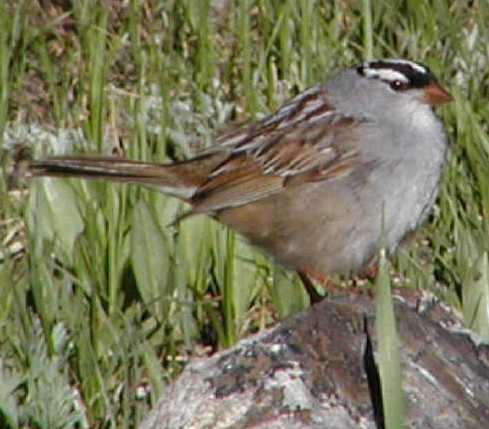 cleverly entering from holiday
More critique of unhealthy faith patterns
C. 7 irrational thinking patterns common in religious addiction
1. Thinking in extremes: driven by an all or nothing, black or white mentality (no gray; my way or the highway) that causes the addict to be very hard on himself/herself and others
2. Drawing invalid conclusions, not based in reality; global thinking i.e., using words like "never, always."
3. Filtering out the positive and distorting reality. These people selectively hear only the negative and are consequently negative about everything, especially themselves; in response to positive input they say, "yes, but..."
4. Filtering out the negative and distorting reality. These people selectively hear only the positive to shield their already low self worth. They allow in themselves what they would condemn in others. A lot of relational wreckage; the weight of restitution can be crushing when they finally see it
5. Thinking with the heart; feelings become the basis for reality because I think my perception is "certainly accurate."
6. "Should, ought" thinking; constant self condemnation of not being able to measure up
7. Co-dependency; egocentric feeling of being responsible for everything; must be in control; eyes always on the needs of others at the expense of their own
1. Toxic Faith. Arterburn, S. & Felton J. (Oliver-Nelson, 1991)
2. Toxic Faith: A Summary, Jackson, B. (http://www.philosophy-religion.org/criticism/toxicfaith.htm accessed 21.12.2005)
Subscribe to:
Posts (Atom)